Robotics case study
VEX Pen-Plotter Robot
This project brought together mechanical design, motion control, automation, and software tooling to build a robot capable of drawing programmed shapes with repeatable positioning and cleaner line quality.
Overview
A full build across software, calibration, and physical design.
The goal was to design and program a VEX-based pen plotter that could draw from coordinate arrays with reliable positioning. That required more than just motion code: the project also depended on calibration behavior, physical stability, and the tooling used to generate the drawing inputs in the first place.
Technical highlights
Parametric path generation
Built a Python tool that generated parametric shapes and exported coordinate arrays to feed the robot's autonomous drawing workflow.
Calibration and homing
Implemented sensor-based homing to establish a consistent coordinate frame between the software model and the robot's physical origin.
Motion tuning and stability
Developed proportional vector control to draw diagonals more cleanly and combined software tuning with mechanical improvements to reduce wobble during plotting.
What made it interesting
This was a strong example of why robotics work rarely fits into a single category. The software had to be correct, but the real result depended just as much on repeatable motion, accurate calibration, gantry design, and how the machine behaved physically.
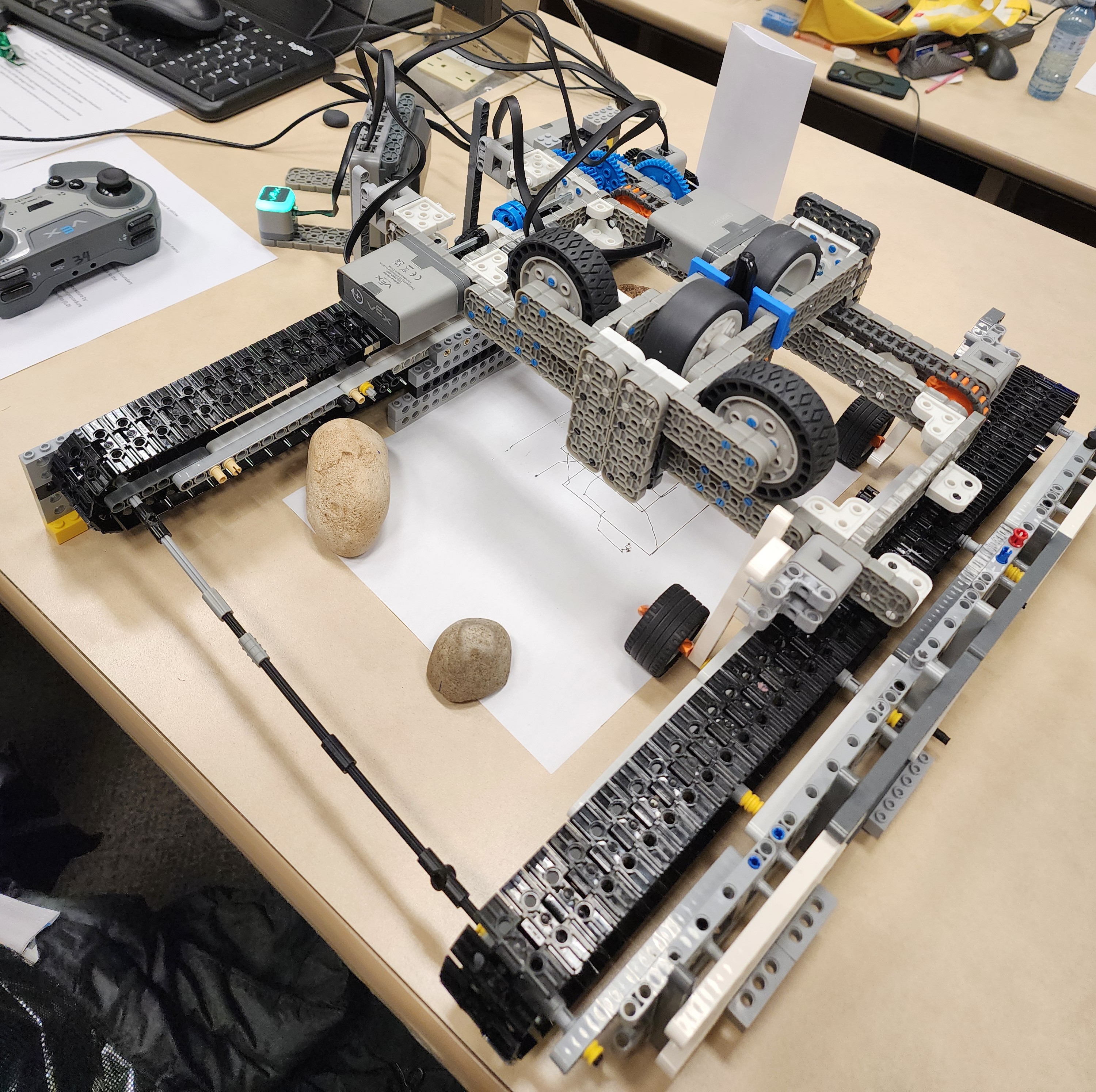
The final system used a two-gantry XY setup and gained a measurable stability boost after adding custom 3D-printed spacers to reduce unwanted movement while drawing.
Media and artifacts
A clear build photo of the robot showing the gantry structure, motion system, pen assembly, and the physical layout that supported repeatable drawing behavior.